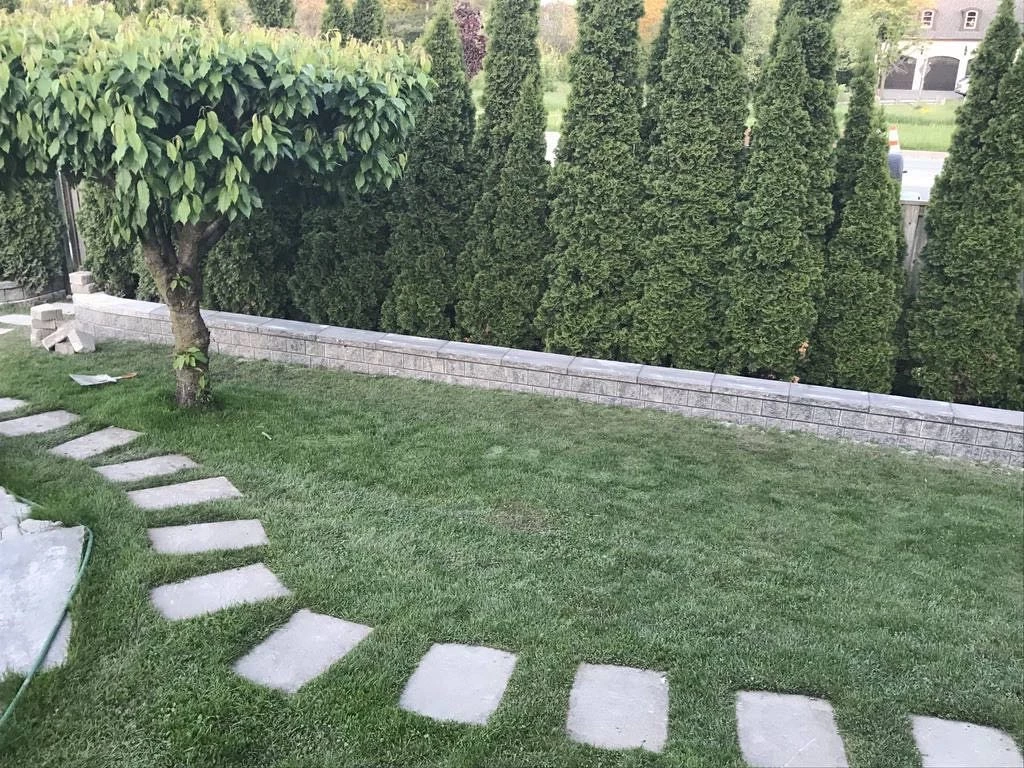
After a long Ontario winter, lawns often come back uneven, pale or patchy. In many GTA yards, the visible grass issue is only part of the problem. Drainage, grading, compaction and shade can all affect how well the lawn recovers once spring arrives.
1. Check what kind of damage you actually have
Not every rough lawn needs full replacement. Some areas only need topdressing, overseeding and better spring care, while others stay thin because water and soil conditions were already weak before winter.
- Look for thin patches, pooled water and compacted traffic areas.
- Notice whether the same areas fail every year.
- Separate cosmetic issues from drainage-related issues.
2. Repair versus replace
If the damage is small and the base lawn is still healthy, patch repair can make sense. If the yard is uneven, frequently soggy or badly compacted, a partial or full re-sod may create a better long-term result.
3. Do not ignore grading and soil
A greener lawn usually starts below the surface. If the soil is compacted or water sits in low spots, new seed or sod will struggle no matter how much you water.
- Low areas can hold water and weaken roots.
- Compacted soil can limit healthy growth.
- Fresh sod performs better on a properly prepared base.
4. Aim for the result you actually want
Some homeowners just want a cleaner spring reset. Others want a lawn that photographs well, drains better and stays healthier through summer. The right repair scope depends on which result matters most to you.
If your lawn in Toronto, Markham or Ottawa is patchy, uneven or holding water this spring, we can help you decide whether repair, regrading or full sod replacement makes more sense.
Request a Free Estimate