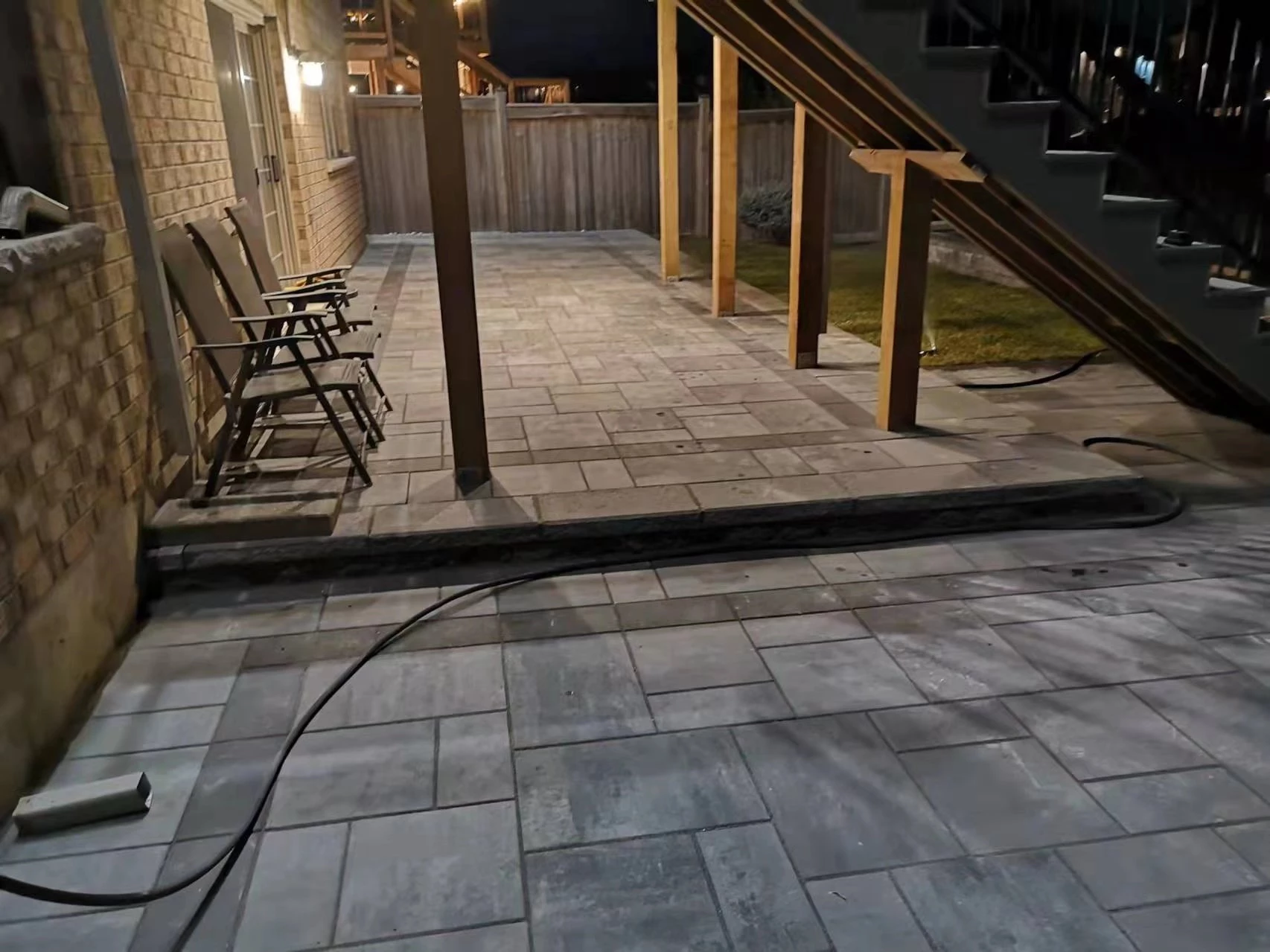
Ontario winters are hard on outdoor surfaces. Interlocking usually performs well when the base is built properly, but winter maintenance still matters. Small choices around snow tools, de-icer products and spring inspections can make the difference between a surface that lasts and one that starts shifting or wearing early.
1. Use the right snow-clearing habits
Plastic shovels and rubber-edged snow pushers are usually safer than sharp metal edges. If you hire snow removal, make sure the operator knows the surface is interlocking so the blade height is not set too aggressively.
- Do not chip at ice with heavy metal tools.
- Keep snow piles from blocking drainage paths for long periods.
- Clear early so packed snow does not turn into hard ice.
2. Be selective with de-icers
Some ice-melt products are harsher than others. Follow the product guidance, use only what is necessary and rinse residue away in spring when temperatures allow. Overuse can contribute to staining or surface stress over time.
3. Watch for water movement
Freeze-thaw issues often begin with water sitting where it should not. If melting snow repeatedly pools near edges, steps or low spots, that area deserves a closer look once winter passes.
- Pooling water after melt
- Edges that start separating
- Pavers that feel loose or uneven
4. Plan a spring inspection
Spring is the best time to reset small issues before they become bigger repairs. Joint sand, edge restraint, minor settling and drainage can often be corrected more efficiently early in the season.
If your interlocking surface in Toronto, Markham or Ottawa is showing movement, drainage issues or winter wear, we can take a look and advise on next steps.
Request a Free Estimate